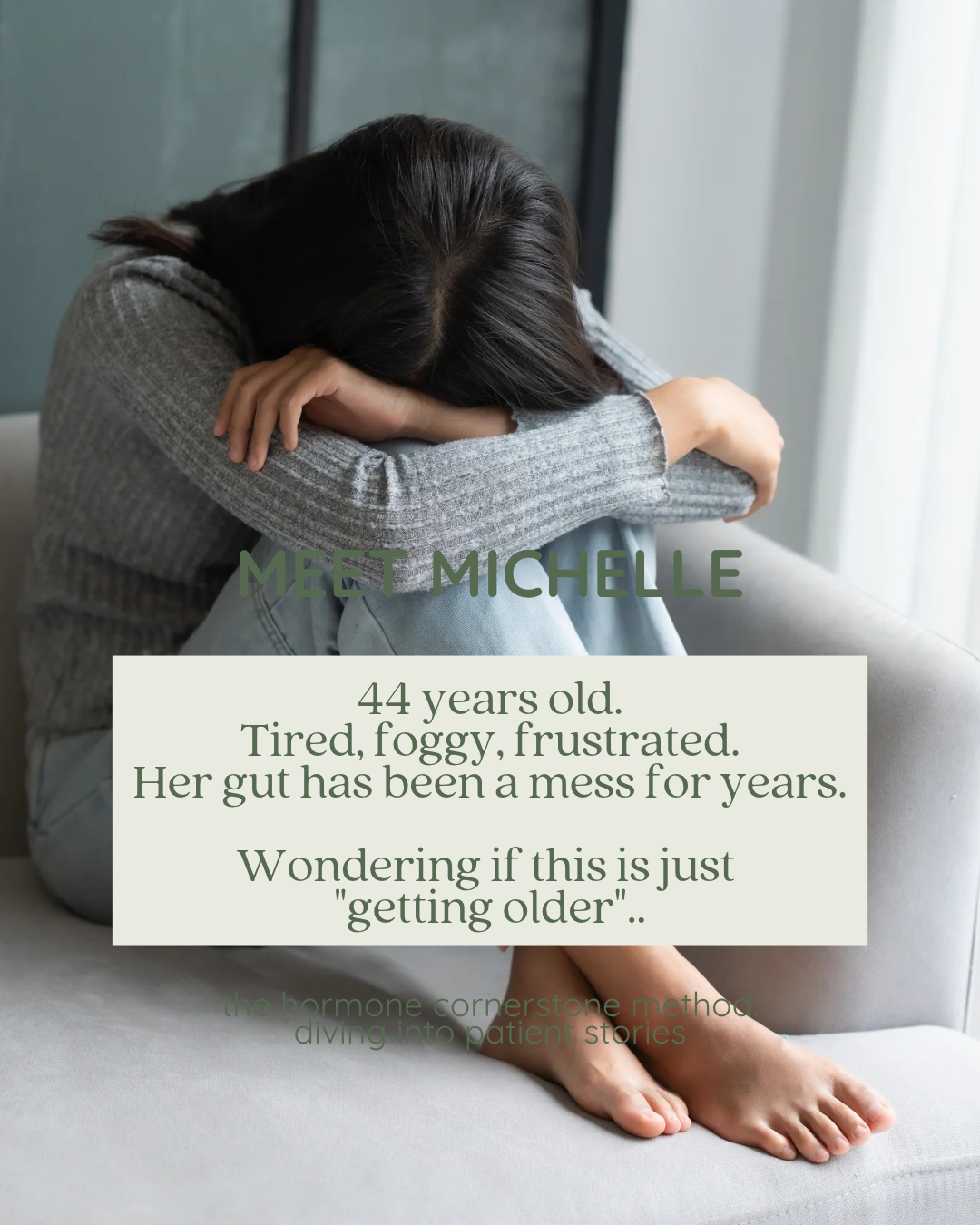
Meet Michelle. She’s a fictional patient, but her story is one I see versions of constantly, which is exactly why I want to share it.
Michelle came to me at 44, tired, foggy, and frustrated. Her gut had been a mess for years, and like a lot of women in their 40s, she’d started to wonder if this was just what getting older feels like.
Her list of concerns had been building for a long time. Fatigue and brain fog that wouldn’t lift. Weight that wasn’t budging no matter what she tried. Irregular cycles with heavy bleeding, worsening headaches, and mood shifts she couldn’t predict. She wondered if perimenopause had started, and honestly, she was right to wonder. But what stood out most in her intake was her gut: chronic constipation and GERD that flared constantly. Her digestion was struggling, and that mattered more than she realized.
In a hurry? If Michelle’stired-and-foggy story already sounds like yours, skip ahead and take my free [Why Am I Always Tired? quiz]. Otherwise, keep reading and let's break down what was actually going on for her.
Why We Started With Her Gut, Not Her Hormones
Here’s the part that surprises people. Before we touched her hormones, we focused on her digestion. It sounds backwards, but it’s one of the most important moves in the whole plan.
When elimination is sluggish, excess estrogen that your body is trying to clear gets reabsorbed and recirculated instead of leaving the body. That can worsen heavy periods, mood symptoms, and weight gain, and it matters even more during perimenopause when your hormones are already fluctuating. Her constant GERD was telling us something too. It’s often a nervous system signal, because chronic stress keeps the body out of the rest-and-digest state your gut needs to work properly.
This is exactly the kind of root-cause digestion and gut health work I love. For Michelle, we started with ground flaxseed, gut-soothing herbal teas, and a customized gut-healing protocol. Then we ran comprehensive bloodwork, looking at thyroid, insulin, and nutrients, because entering perimenopause without that full picture is really just guessing.
What’s Actually Happening in Perimenopause
Perimenopause isn’t just periods getting weird. Estrogen fluctuates unpredictably while progesterone steadily declines, and that imbalance is what drives so many of the symptoms women get blindsided by: heavy bleeding, worsening PMS, mood shifts, headaches, brain fog, and poor sleep.
For Michelle, supporting her gut was step one, because without proper estrogen clearance through digestion, nothing else holds. If you’re in your 40s and wondering what your options are as symptoms ramp up, I break the bigger picture down, including where something like hormone therapy fits, in my post on starting HRT in perimenopause.
Visit Two: The Strategy
When Michelle’s bloodwork came back, it confirmed what we suspected: insulin resistance. That one finding connected so many dots, the stubborn weight, the fatigue, the brain fog, and even the heavy periods. Insulin dysregulation makes the hormonal chaos of perimenopause significantly worse, so it’s a big deal to catch it early.
We added targeted insulin support, optimized her nutrient dosing, and kept building on her gut protocol. By this visit, her bowel movements were regular and her GERD had already improved significantly. A real win, and proof we were on the right track.
Visit Four: Cornerstone Refinement
By her fourth visit, Michelle felt like herself again. Her cycle was still irregular, but the bleeding was lighter and her headaches were less frequent. Her PMS had become manageable, her GI symptoms were minimal, and her energy was back.
But the shift I was most proud of? She finally had the capacity to show up for herself consistently. That’s what becomes possible when your body isn’t fighting you anymore. This is exactly what the Hormone Cornerstone Method is designed to do. Not a quick fix for one symptom, but a plan that keeps working as your body responds.
This Is the Hormone Cornerstone Method in Action
Michelle’s story is a good example of how I work through my Hormone Cornerstone Method, a framework that looks at six interconnected areas of your health rather than chasing one symptom at a time. Her gut, her hormones, her blood sugar, her nutrients, and her nervous system were never separate problems. They were all talking to each other, which is why treating her gut first is what let everything else fall into place.
Questions I Hear All the Time
Can Gut Health Really Affect My Hormones?
Yes, more than most people realize. Your gut is one of the main ways your body clears used estrogen. When digestion is sluggish and elimination slows down, that estrogen can get reabsorbed instead of leaving the body, which can worsen heavy periods, PMS, mood symptoms, and weight gain. Supporting digestion is often one of the first steps in balancing hormones, especially in perimenopause.
Is It Normal to Feel Tired, Foggy, and Bloated in Perimenopause?
It’s common, but common isn’t the same as something you just have to live with. Fatigue, brain fog, and digestive issues often have identifiable, treatable drivers like insulin resistance, nutrient gaps, thyroid changes, or sluggish estrogen clearance. The goal is to find out what’s actually behind your symptoms rather than writing them off as age.
What Is Insulin Resistance, and What Does It Have to Do With Perimenopause?
Insulin resistance is when your cells stop responding well to insulin, which can lead to stubborn weight, fatigue, brain fog, and more difficult periods. It tends to worsen the hormonal shifts of perimenopause, which is why it’s one of the things I test for. Catching it early makes a meaningful difference in how the whole transition feels.
Do I Have to Be in Toronto to Work With You?
No. I see patients in person at Body Co in the Junction, serving Bloor West Village, High Park, and the wider West End of Toronto, and virtually for anyone across Ontario.
Ready to Feel Like Yourself Again?
If Michelle’s story sounds like yours, if you’re tired, foggy, and tired of being told your symptoms are just part of getting older, that’s exactly the kind of thing I love getting to the root of, whether you’re here in the West End of Toronto or joining me virtually from anywhere in Ontario. When you’re ready, Book Now and we’ll take a proper look at what’s actually going on.
Disclaimer: Any information is for informational purposes only and is not intended to be used in place of professional medical advice. Always seek the advice of a qualified health care practitioner with any questions or health concerns you may have and before starting any new treatments (including supplements).