I want to tell you the thing I come back to time and time again. After treating thousands of men and women, watching patterns repeat across so many different bodies and lives, this is the truth I keep landing on: we can do all the supplements and herbs in the world, but if we never take a look at your emotions, we don't really get where we need to go.
I say this to patients all the time, and I usually watch something click. There's a nod, a pause, sometimes a quiet "yeah, that makes sense." Because on some level, most of us already know it. We can feel that our stress, our grief, our worry, and the things we've been holding onto don't just live in our heads. They live in our bodies too.
So let's talk about why that is, and why I believe your emotions might be running more of the show than you think.
Can emotions actually cause physical symptoms?
Yes. And I don't mean that in a dismissive, "it's all in your head" way. I mean the opposite. Your emotions are deeply, physically real, and your nervous system is the bridge that carries them into your body.
Here's the short version. When you experience something stressful or emotionally charged, your nervous system responds before you've even consciously processed it. Your sympathetic nervous system, the fight or flight branch, kicks in. Your body releases cortisol and adrenaline. Your heart rate shifts, your digestion slows, your muscles tense. This is brilliant when you're facing an actual threat. The problem is that your nervous system doesn't always know the difference between a bear and a hard conversation, a looming deadline, or a grief you haven't had space to feel.
When those emotional experiences pile up without release, your body can end up living in that activated state. And a body stuck in fight or flight starts to show it. Trouble sleeping, tension headaches, gut issues, feeling tired but wired, skin flare-ups, a cycle that feels off. These aren't random. They're often your nervous system waving a flag.
Why your hormones answer to your nervous system
This is the part I really want you to hear, because it changes how you understand your own body.
Your hormones do not operate in a vacuum. They are constantly responding to what your nervous system is doing. When you're stuck in a stress state, your body prioritizes survival, and it will happily deprioritize things like balanced sex hormones, steady energy, and smooth digestion to do it. Cortisol is a big player here, and when it stays dysregulated for too long, it pulls other hormones along with it.
I've written more about this in [my post on cortisol] and what it's really doing in your body, because so many people are told to just "lower their cortisol" without understanding that cortisol isn't the enemy. It's a necessary, healthy hormone. The goal is balance, not elimination. But balance is almost impossible to reach if your nervous system never gets the signal that it's safe to come out of survival mode.
So when a patient comes to me with a hormone concern, one of the first things I'm actually assessing is their nervous system. Because you can take every hormone-supporting herb on the shelf, but if your body is convinced it's in danger all day long, those hormones are going to keep answering to that alarm.
What Traditional Chinese Medicine understood a long time ago
I love that modern science is catching up to something Traditional Chinese Medicine has held for thousands of years. In TCM, emotions aren't separate from physical health. They are woven directly into it. Specific emotions are connected to specific organ systems, and unprocessed or excessive emotion is understood as a genuine root cause of imbalance, not a side note.
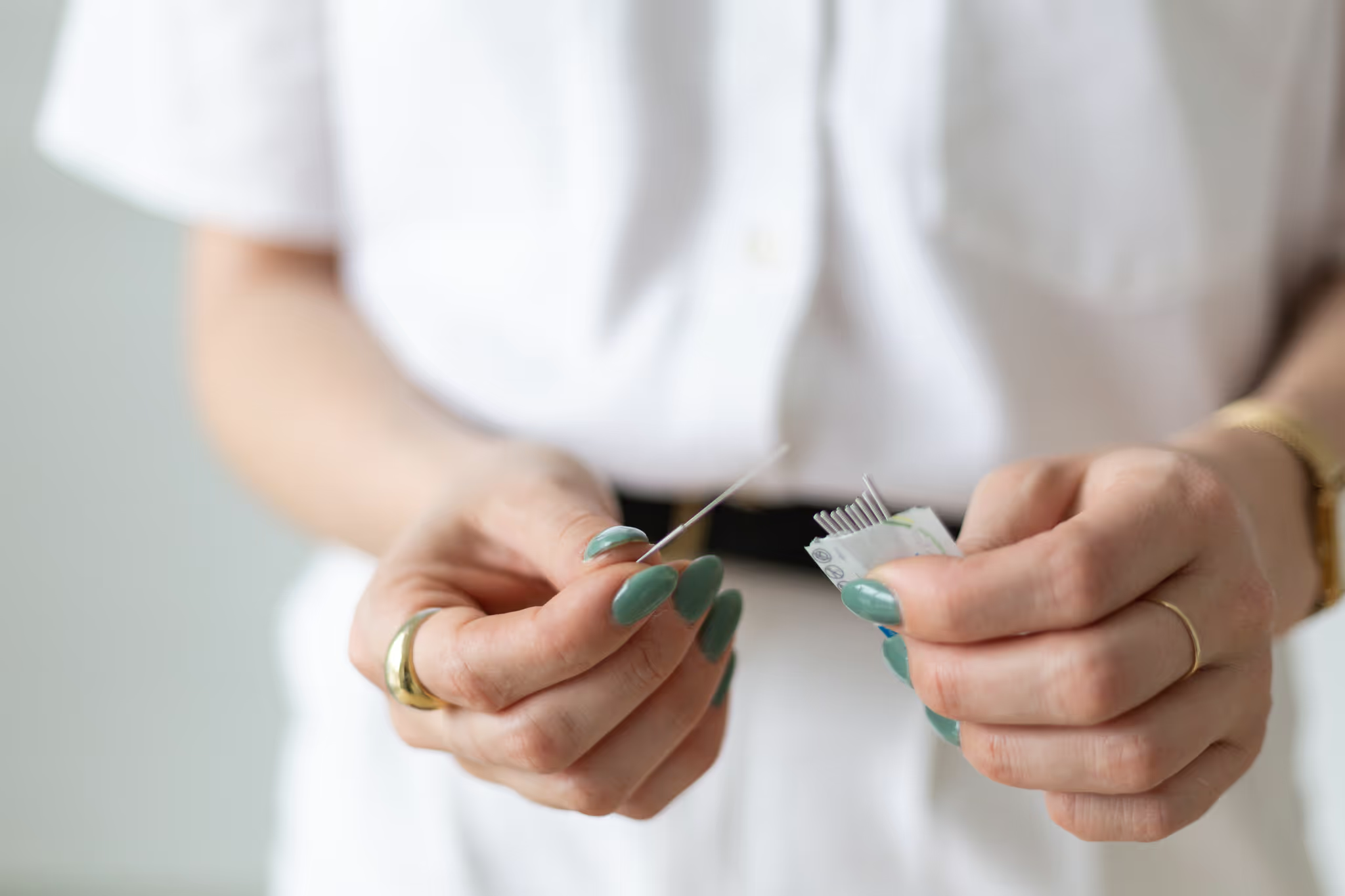
As someone who practices evidence-based naturopathic medicine with acupuncture, I find this framework incredibly useful. It gives language to something patients feel but can't always name. That the anger they never expressed, the worry they carry constantly, the sadness that settled in and stayed, might actually be part of the physical picture we're trying to solve. In TCM, getting to the root means asking about emotions, always. I carry that same belief into every part of my practice.
So what do you actually do about it?
This is where it gets hopeful, because your nervous system is remarkably responsive when you give it the right inputs.
A lot of my work with patients is about helping the body remember how to drop into the parasympathetic state, the rest and digest mode where healing actually happens. That can look like breathwork, acupuncture, gentle movement, better boundaries, and yes, sometimes it looks like finally giving an old emotion somewhere to go. Simple daily practices matter more than people expect. If you want a place to start on your own, I walk through a few of my favourite nervous system tools in [my post on vagal nerve exercises], and they take just a few minutes a day.
But I'll be honest with you about my actual opinion here, since that's what this post is really about. The tools help, and I'll never stop recommending them. But the deeper shift happens when we stop treating your body and your emotions as two separate projects. They were never separate. Your body has been keeping the emotional score all along, and when we finally listen to what it's telling us, that's when things start to move.
That's the whole heart of how I practice. Not chasing symptoms one by one, but looking at the whole person, nervous system and emotions included, and asking what your body has been trying to say.
If any of this resonated, if you've been doing everything "right" and still feel like something deeper is being missed, I'd love to talk. [Book a free discovery call] with me and let's look at the full picture together, because you deserve care that treats all of you.
Disclaimer: Any information is for informational purposes only and is not intended to be used in place of professional medical advice. Always seek the advice of a qualified health care practitioner with any questions or health concerns you may have and before starting any new treatments (including supplements).